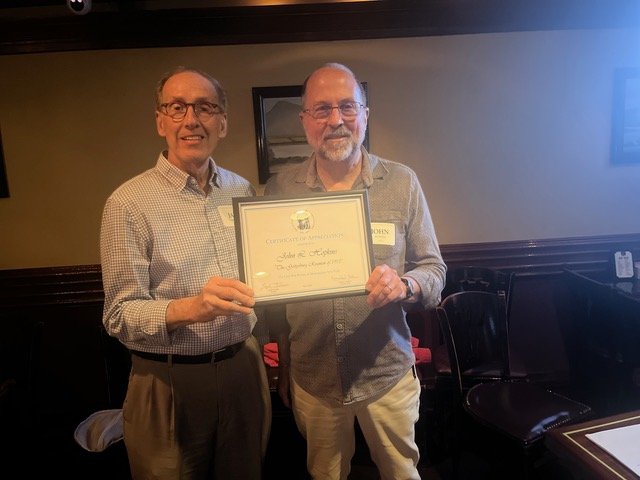
A fascinating talk on Gettysburg 50 years later
On May 18th we were treated to a fascinating presentation on the events surrounding the 1913 50th Anniversary of veterans of Gettysburg. Our speaker, John L. Hopkins, explained to us the interesting circumstances of the national interest in the event, with a huge gathering of tens of thousands of veterans and spectators amassing a large space in Gettysburg for the huge event.
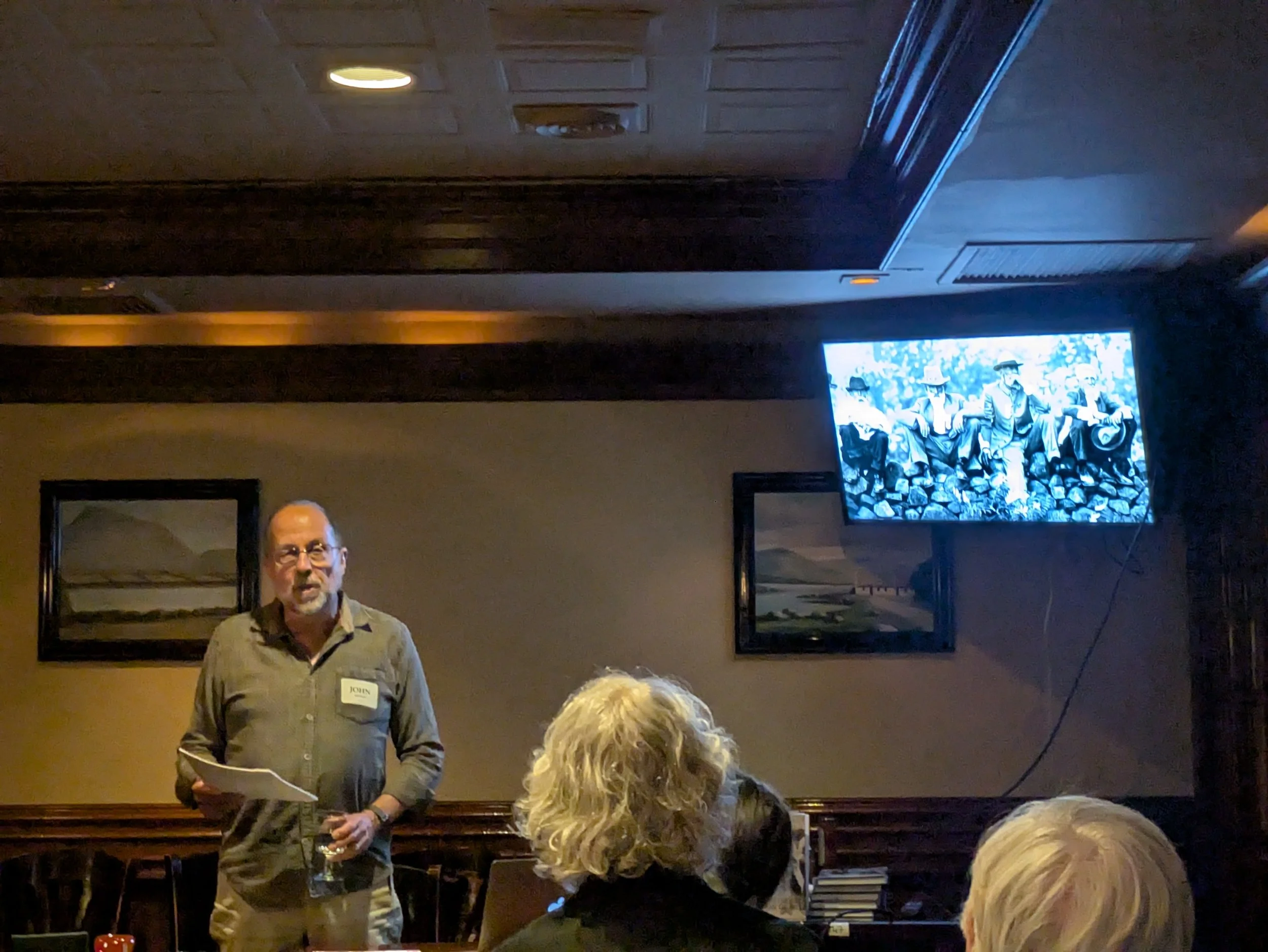
The Commonwealth of Pennsylvania took the initiative for the event in 1910, sending out invitations to the other States both North and South to organize delegations of veterans to attend the reunion set for 1913. The organizers petitioned Congress for funding (of nearly $ 1 million in dollars of that day). More than 50 trainloads of soldiers brought the veterans together. Even a temporary Post Office was set up, with veterans sending cards back to their home towns to mark the ceremony.
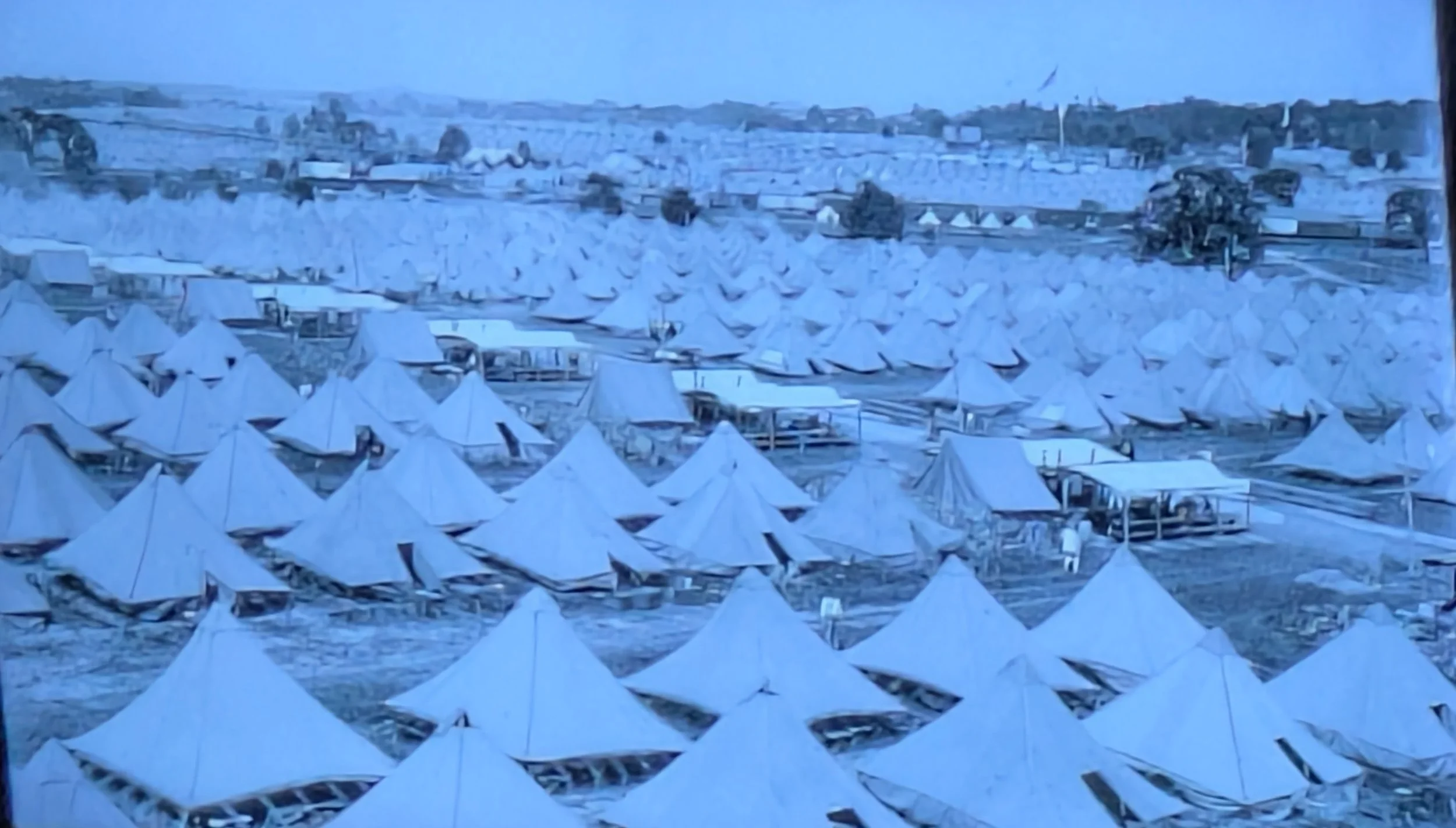
Logistical arrangements were complex, with nearly 7,000 tents set up for the veterans and almost 200 field kitchens needed to feed the attendees.
Among the veterans present were not only the surviving generals and officers (including the hero from Maine at the defense of Little Round Top, Joshua Chamberlain, as well as infamous General Sickles, now 92 years old). Also attending were officers such as the great-uncle of General George Patton Jr. The reunion brought together soldiers even within the same division who had not seen each other over the past fifty years.
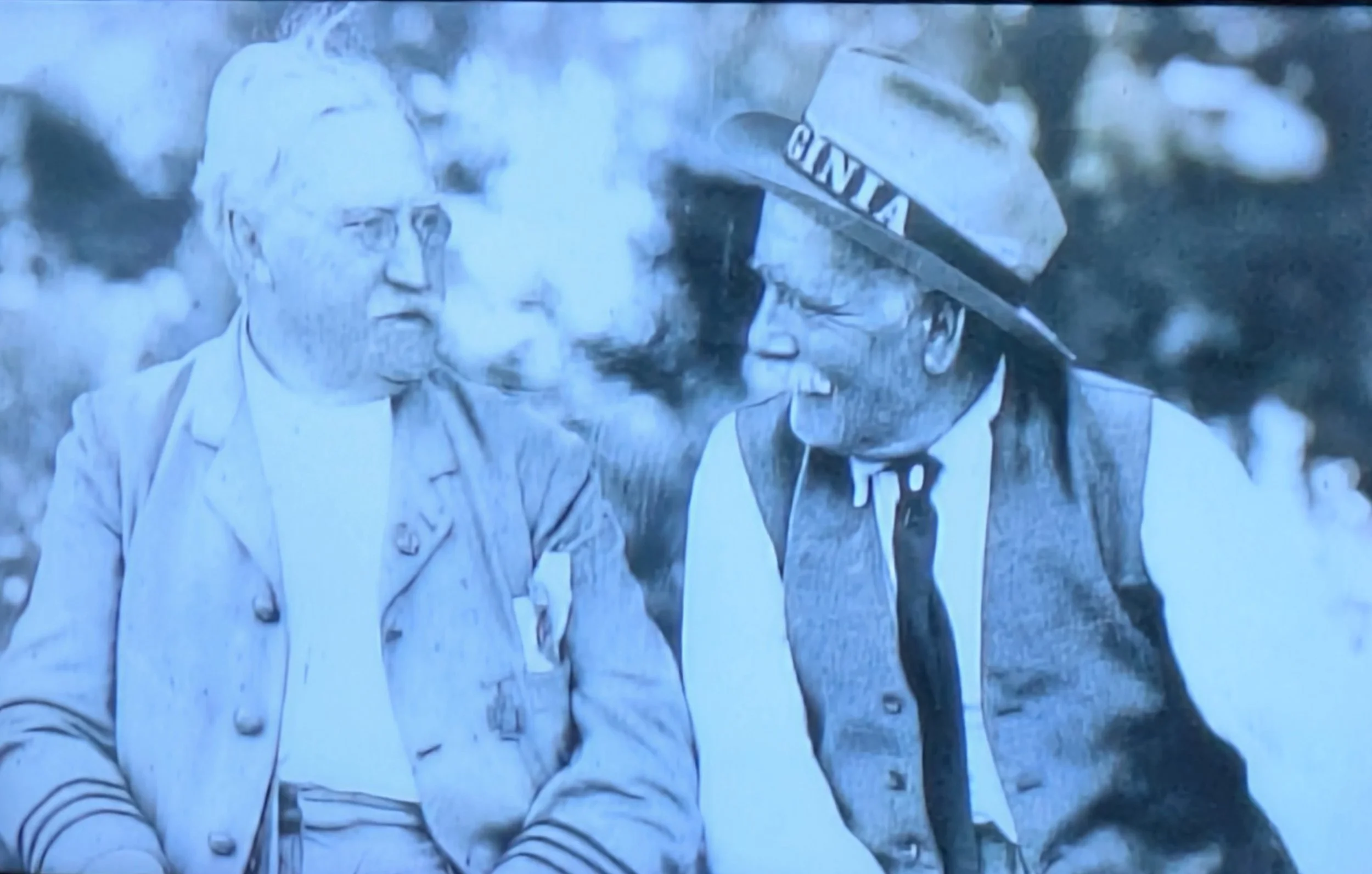
In some cases, soldiers from the Union and Confederacy met and decided to keep in touch, even meeting at one or another’s home after the event.
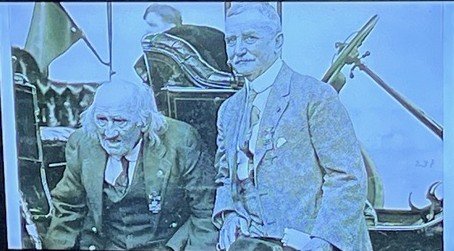
The oldest and youngest veterans at the reunion
Not all was peaceful. A skirmish broke out on July 2nd when some soliders from the South were heard making disparaging remarks about Abraham Lincoln, provoking a fist-fight among the soldiers present. Veterans from the North dominated the attendee list, but there were also a large gathering of soldiers from the South. One event during the 3-day gathering was a re-enactment of Pickett’s charge on July 3rd. Representatives from the South viewed to see which State deserved more credit for their sacrifices on the battlefield, whether it be Virginia or North Carolina. (The North Carolina veterans swore that they reached the highest point north in Pickett’s charge.)
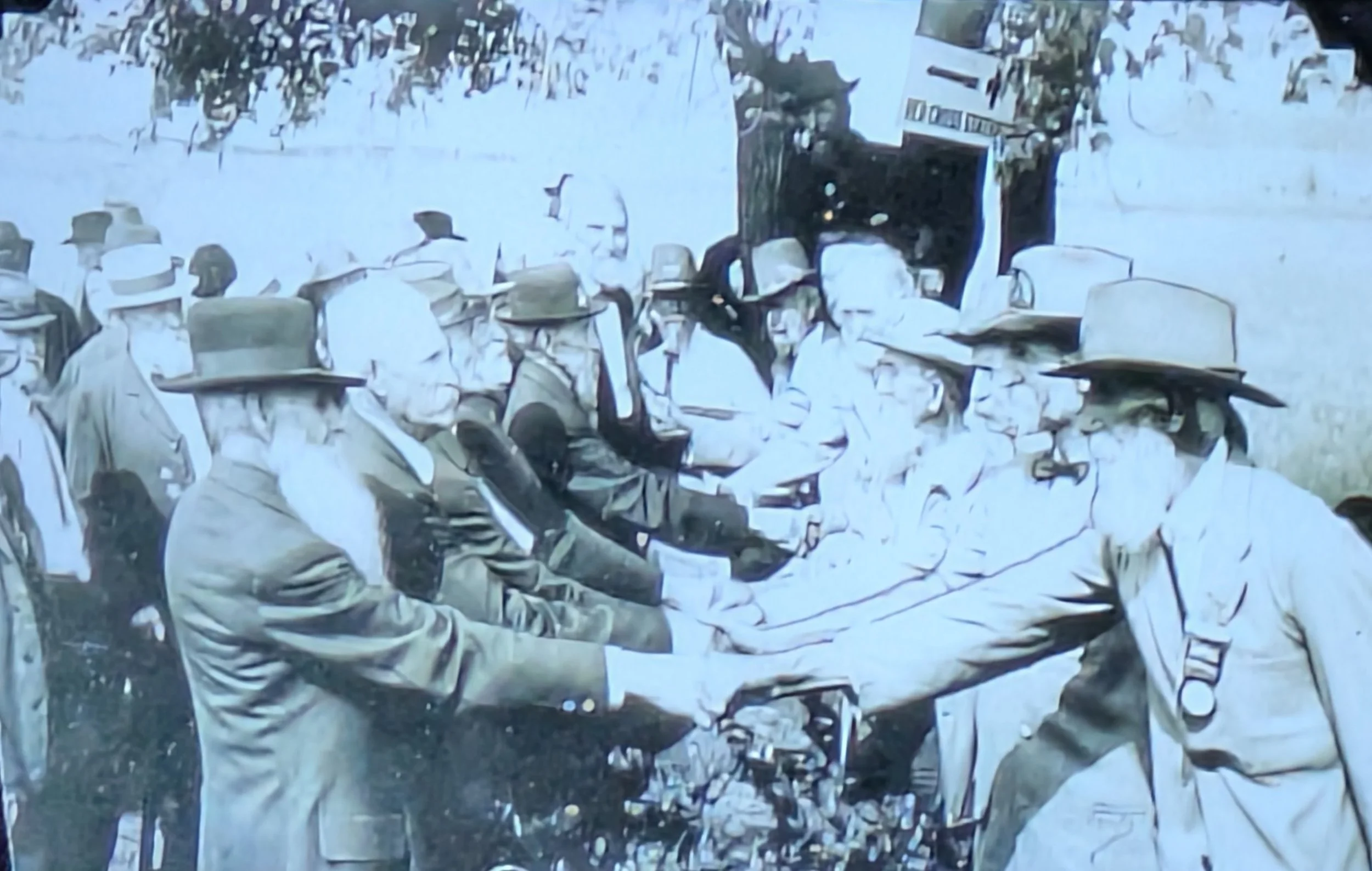
The staged events included the gathering of North and South soldiers shaking hands across a wall in the battlefield.
The last day witnessed a marching band to begin the ceremonies, followed by a High Mass celebrated by the Irish brigade from the North. After his speeches, a bugle was sounded and the camp observed a 5-minute final tribute of silence. Only around 10-15 thousand veterans remained alive to that day.
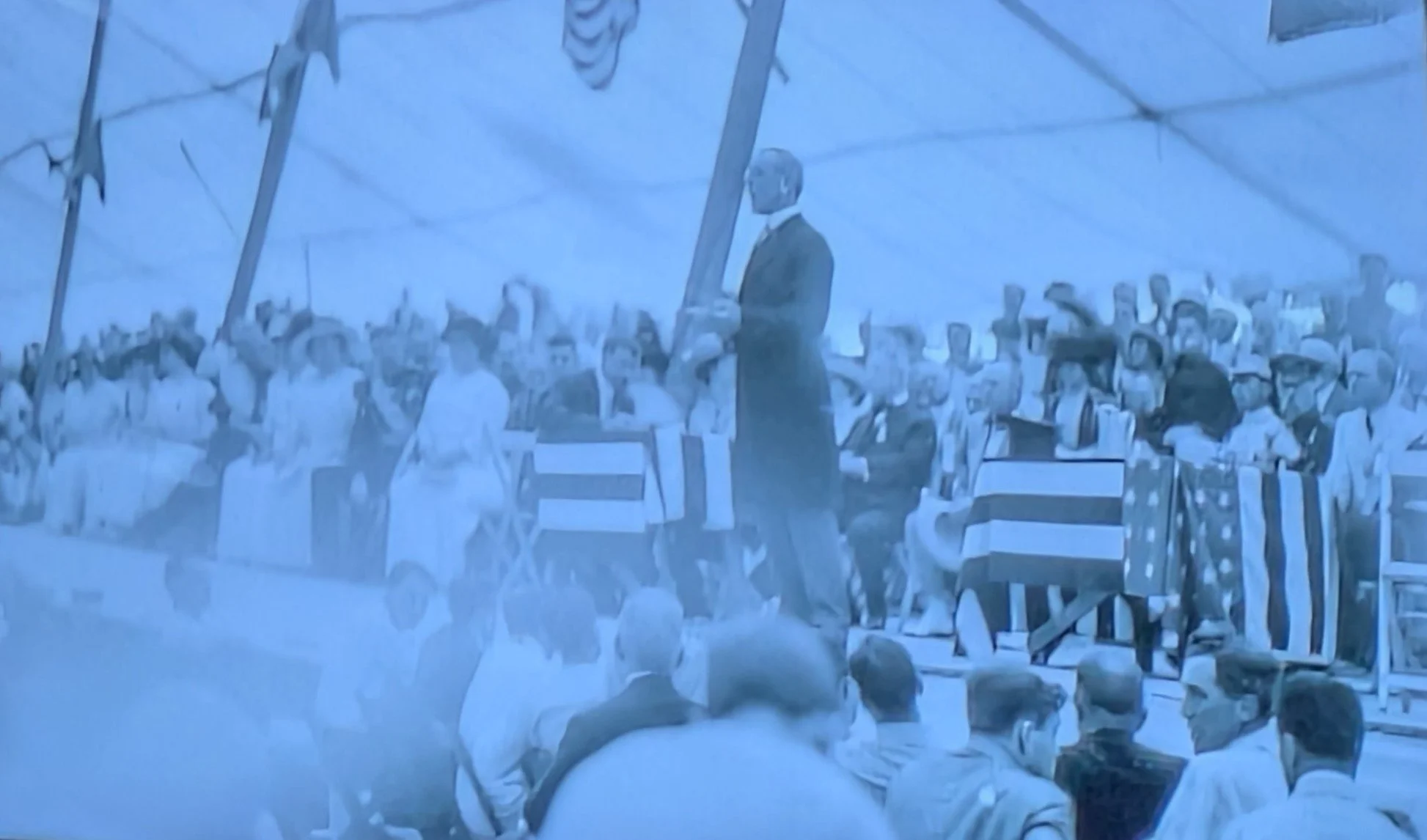
President Woodrow Wilson attended and made a speech emphasizing unity among the now reconciled States.
President Wilson (known for showing the racist KKK film “Birth of a Nation” in the White House) reflected the mood from the South about the “Lost Cause” and the myth that the Civil War was all about States Rights — but the veterans knew the truth that the war was really about Slavery. Black American soldiers among the Union representatives were also present, but only a few — these former slaves showed roughly ten years less Life Expectancy than their White peers, and less than 30% of the Black soldiers survived to 1913.
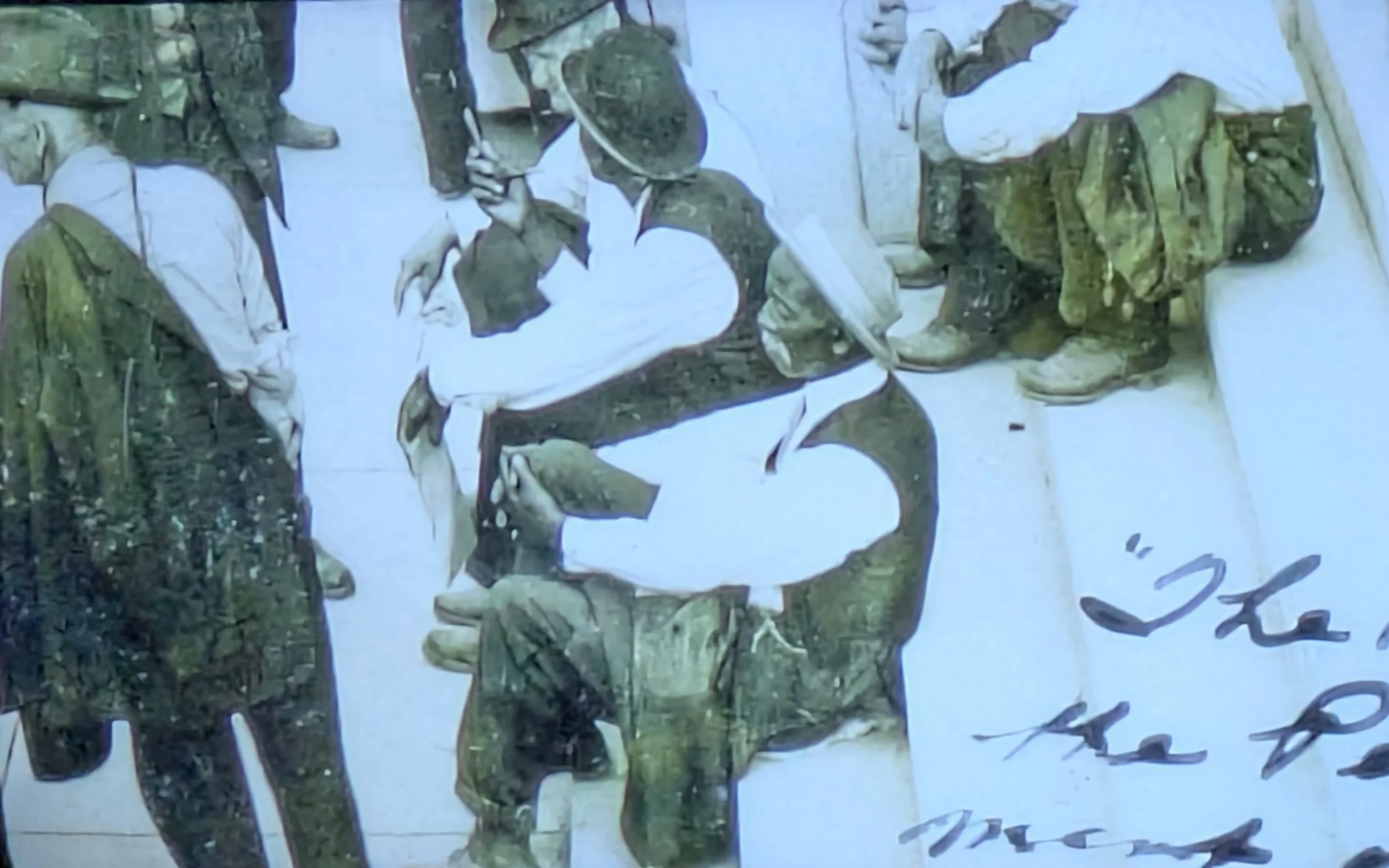
The initiative also called for a Peace Memorial, which never materialized due to lack of funding (and which finally came to fruition only in 1938 at the 75th anniversary of the famous battle).
From photographs of the event shown by Mr. Hopkins, one gets the sense that the America of 1913 was very different from that of 1863 — the country was ready to move on, the United States were now re-unified, the country was now in full industrialization with telephones, automobiles and modern machinery, and the country was now looking beyond domestic affairs to the international scene.
Mr. Hopkins’ book (“The World Will Never See the Like: The Gettysburg Reunion of 1913”) is published at Savasbeatie.com