Lincoln as a Classical Statesman
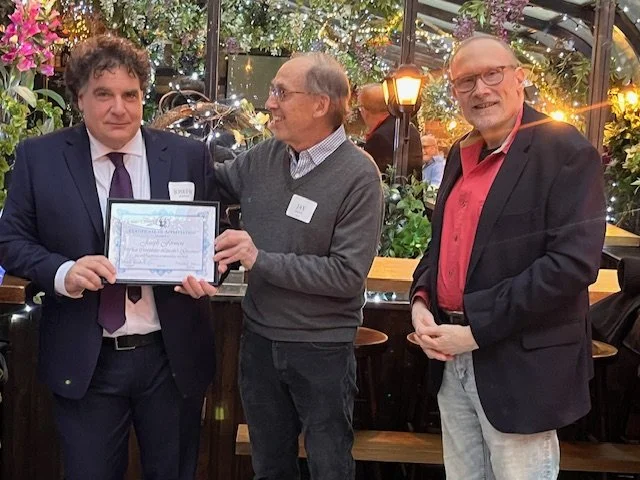
Last week we were treated to a fascinating presentation by Professor Joe Fornieri from upstate New York, looking at Lincoln from the standpoint of the “Great Books”. Fornieri is a noted scholar with a strong background in ancient history and philosophy, and he applied his knowledge of Plato and Socrates (plus modern scholars) to highlight the ways in which Lincoln fit the mold of a great Statesman as defined by the classics.
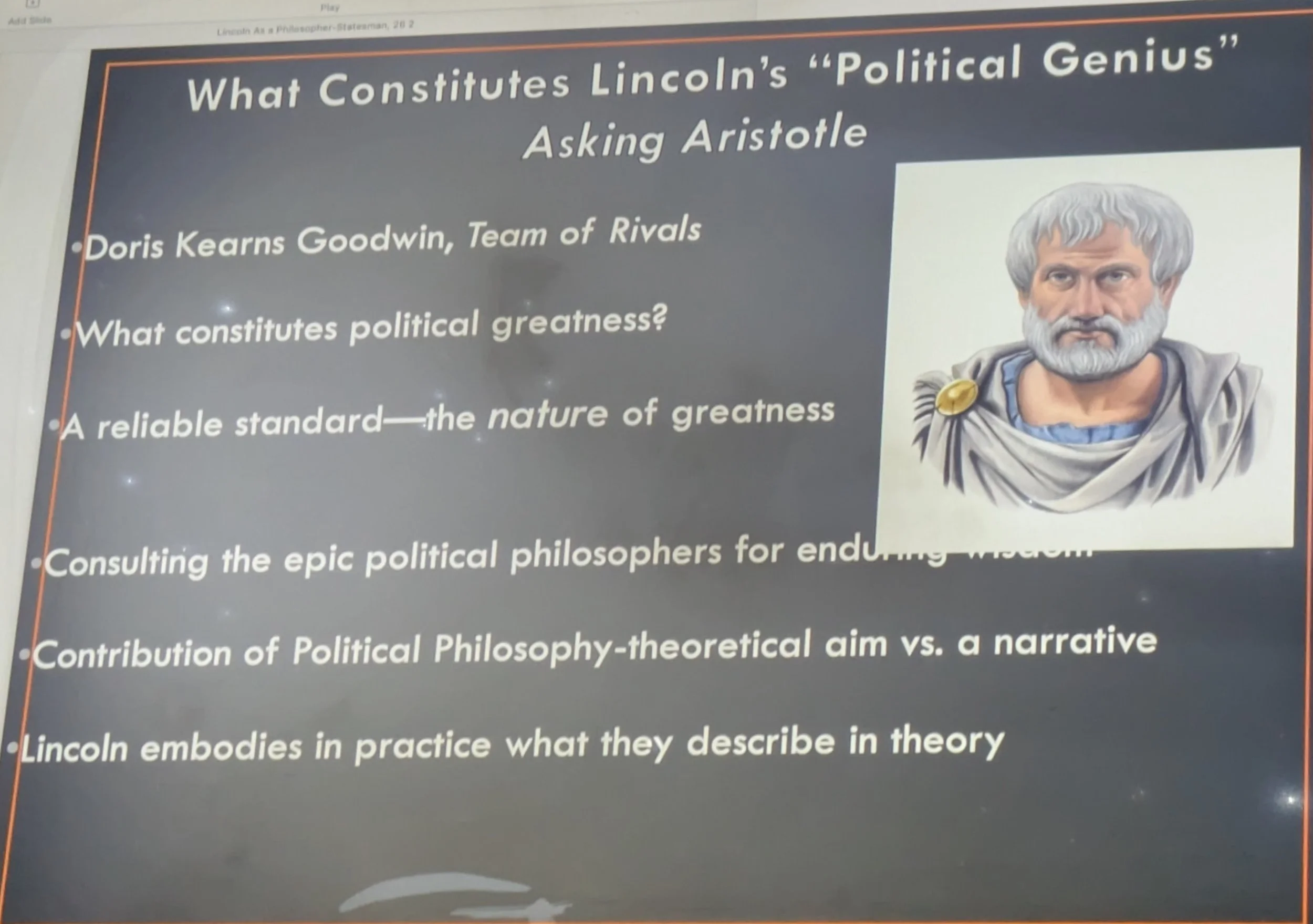
Joe used the above slide to drive his criteria as to how one could judge Lincoln as a Statesman (as classically defined). On the question of “enduring wisdom”, Professor Fornieri showed Lincoln’s involvement in the great debates of the time, especially on free wage labor versus the alternative of a slave economy. The talk showed the importance of the Battle of Ideas during the Civil War. Lincoln engaged in active challeges to the role of paternalistic slavery in the economy of the South. While advocates of slavery denounced wage slavery in free markets, Lincoln rebutted arguments from Alexander Stevens and other Southern leaders by putting together a combination of theoretical and practical wisdom. “Slavery is doomed to extinction”, Lincoln proclaimed. “Broken eggs cannot be mended.” To him, Liberty required the Union of the states. Lincoln looked to the root cause, the “Principles”, the first cause underlying other issues. In his love for the country, he praised Henry Clay despite his stance on slavery. Lincoln also stood up against Natavisim, the “Do Nothings” who opposed Catholics, the Irish, Germans, and other non-English immigrants. During the Civil War, when Grant issued his order displacing Jews, Lincoln revoked the order.
In short: We were treated to a full summary of where Lincoln stood in the criteria used by the classics to define a Statesman