
An engaging talk on Sherman’s March and the Emancipation
On Monday evening July 20th we were treated to an excellent presentation of his book by the author, Professor Bennett Parten from Georgia Southern University, on the topic of Sherman’s March to the Sea and what it meant for Emancipation in US history.
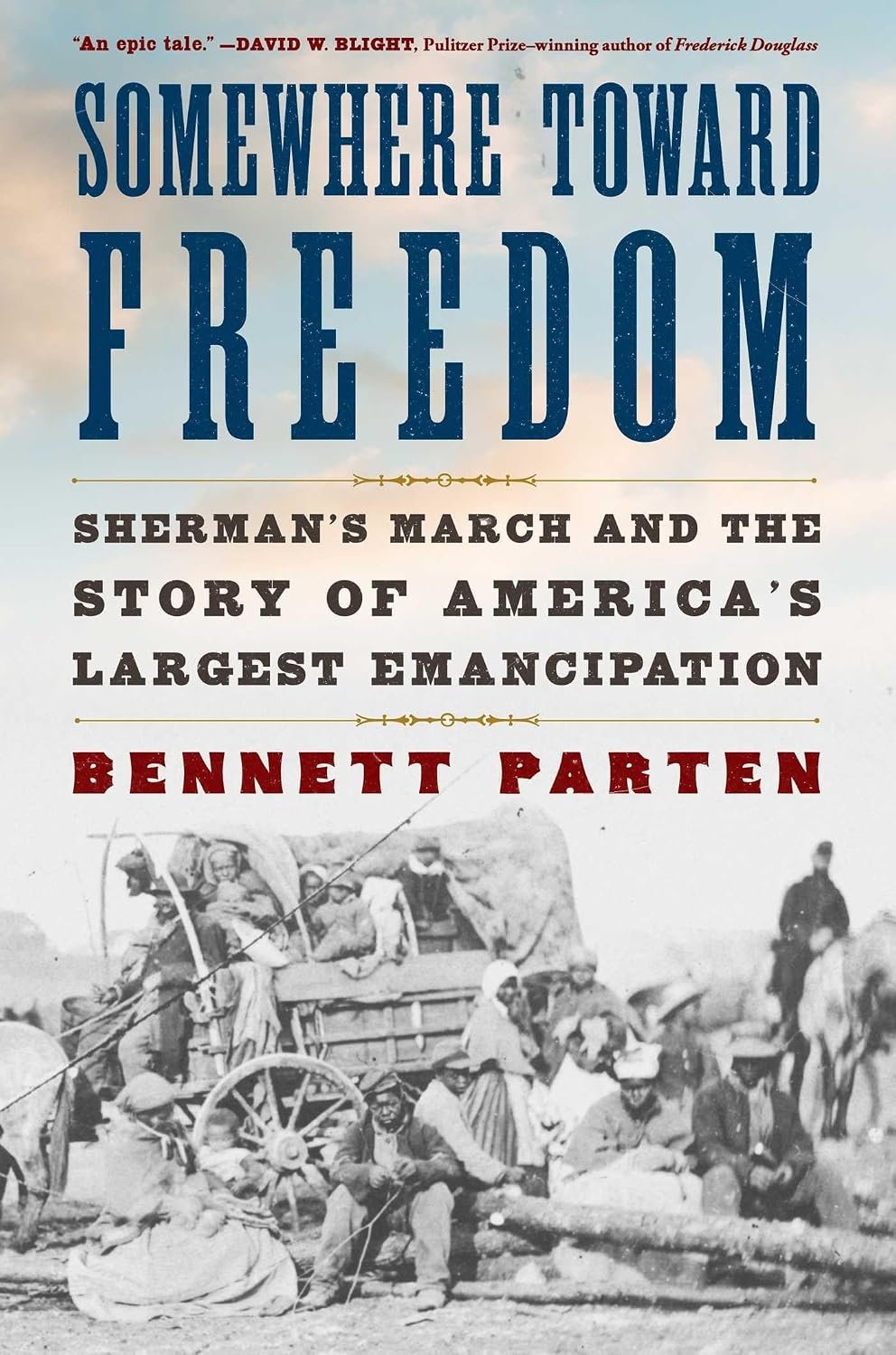
The presentation was preceded by a ceremony hosted by the Seward Award Committee (Chris Ankner, Pamela Hirsh and Julie Simkin), in which Chris announced Professor Parten as the winner for his book (shown above).
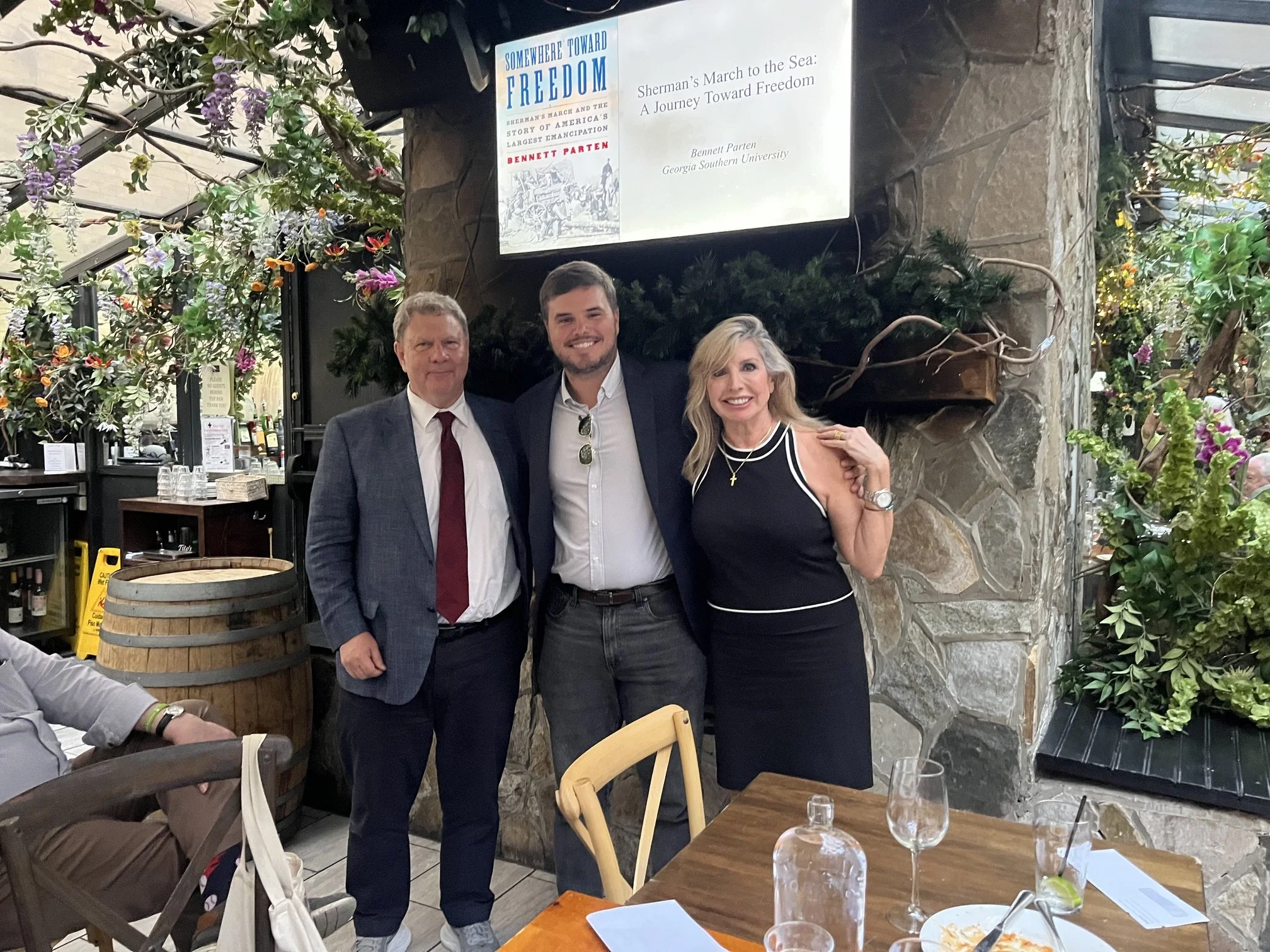
Our guest from Savannah, Georgia gave us a fascinating summary of his book, how he came up with the topic and what he found. The origin of the story comes from a book by E.L. Doctor on the Sherman March to the Sea, in which one character is a former slave joining the Union Army on its way pillaging through the countryside. Professor Parten explained that in fact this one character was simply a drop in the bucket, as there were more than 20,000 formerly enslaved Americans who joined Sherman’s army. The actual number of these “refugees” (as Professor Parten explained) ranged probably much higher given that some refugees sought to join the Army but were rejected, or who died along the way, or who wished to join but were caught by Confederates.
The March cut a wide swath across the Georgia countryside from Atlanta down to Savannah — 30 miles wide! The total humanity on the move was immense, with around 60 thousand US soldiers plus more than 20 thousand emancipated refugees, falls into perspective when one considers that Savannah itself had a total population of around 22 thousand — the March was more than 3 times bigger.
The swarm of refugees helped the Union Army in several ways. Marching south to Savanwnah on a mission based on “foraging” and “living off the land”, the food supply started to run low as the troops left Atlanta heading into Carolina swamp and marshland. The formerly slaves joining the March helped stave off starvation by showing how to cook rice to the White soldiers (mostly from the Midwest and unfamiliar with the territory). Emancipated refugees were critical for tactical intelligence on Confederate movements and capabilities. These former slaves were vital members of the “Military Pioneers”, Sherman’s forces to perform manual labor for the troops.
Some Union leaders resented the hassles of accomodating an army of refugees trailing behind their wagon trains. Racism played its part too. Professor Parten recounted the tragic story of Ebenezer Creek, where one racist Union general decided to destroy a pontoon bridge built by the slaves and which was now clear following the successful passage of Union soldiers — leaving the emancipated refugees helpless against a devastating attack by Confederate cavalrymen. Senior Union leadership (Stanton and Sherman) reacted sharply to the Ebenezer Creek massacre by issuing the famous “40 acres and a mule” order (which became the foundation for the subsequent Reconstruction measures).
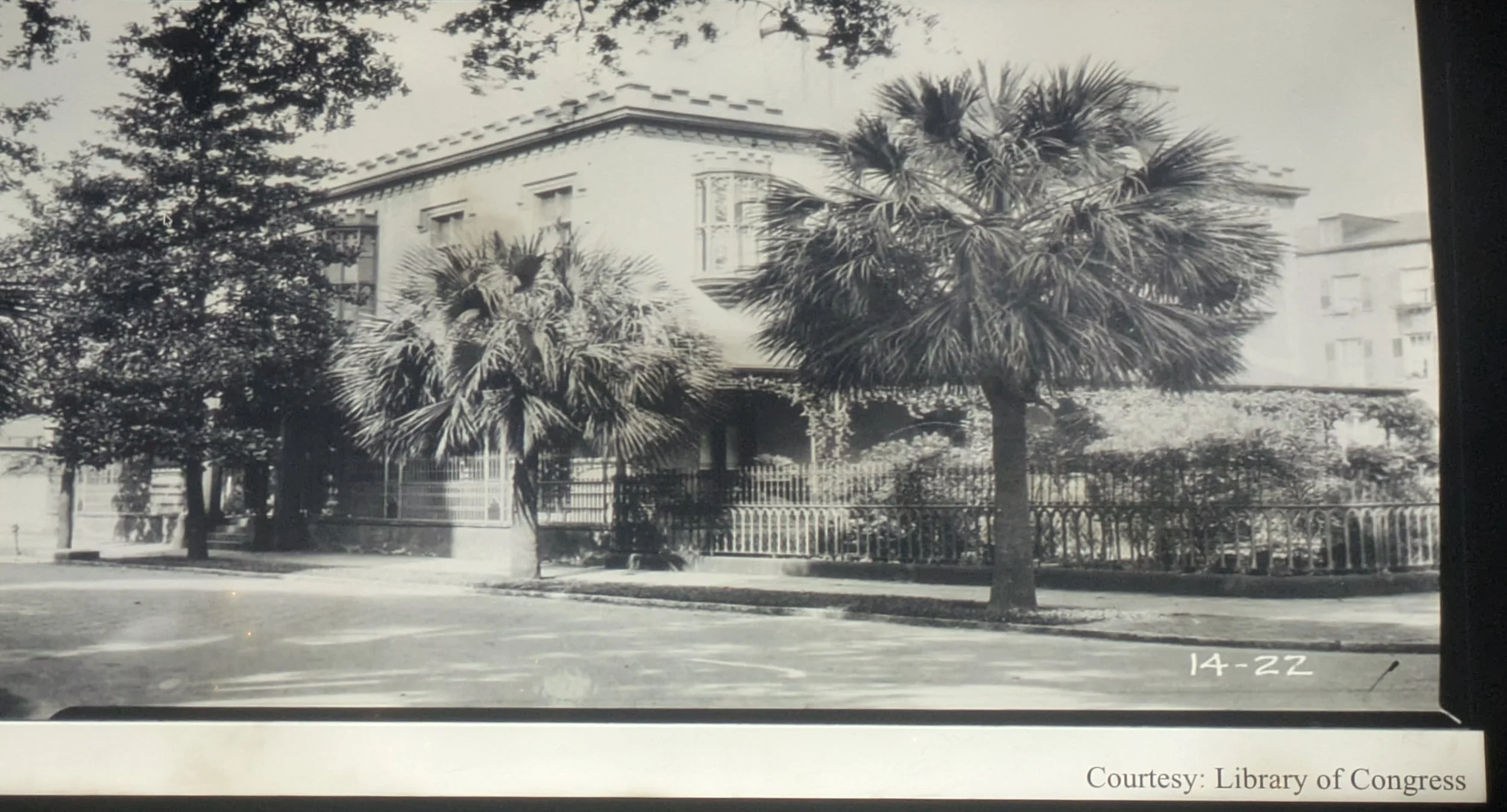
The house in Savannah where General Sherman met with Black leaders in the town who were now emancipated, leading to “Special Field Order 15” which laid out Sherman’s terms for land and mules for the now freed families.
Altogether, the March to the Sea led to the largest Emancipation moment in the Civil War. Thank you Professor Parten for this lively talk.
Remarks for the Presentation of the William H. Seward Award
Honoring Bennett Parten for Somewhere Toward Freedom
Good evening, everyone.
It is my great pleasure tonight to present the William H. Seward Award for the finest recent book on the Civil War era. Seward himself once warned the nation that the conflict between freedom and slavery was an "irrepressible conflict" and the book we honor tonight reminds us that when that conflict finally came, the enslaved people of the South did not wait passively for freedom to arrive. They marched out and seized it.
Before I announce our winner, I want to acknowledge the strength of this year's shortlist, because the committee did not have an easy job. Our four finalists were:
Lincoln's Lady Spymaster by Gerri Willis, which restores Elizabeth Van Lew to her rightful place in our history: the Richmond abolitionist who ran a Union spy ring in the heart of the Confederate capital, feeding General Grant the intelligence he needed in the war's final act.
General Philip H. Sheridan: Life, War, and Memory by Jonathan Noyalas, a long-overdue reassessment of a general every bit as consequential as Grant and Sherman, and a man of profound contradictions — liberator and oppressor both.
Lincoln's Peace by Michael Vorenberg. The book was a one-trick pony, but it was quite a trick. In the Preface Professor. Vorenberg asks a simple question; when did the Civil War end? Most people in the bar outside will say Appomattox. The members here tonight will ask, what about Joe Johnston. Some of the sharper-eyed will ask, what about Kirby Smith in Texas. Prof Vorenberg Also explores the Indian Wars and White Supremist battles.
And finally, our winner: Somewhere Toward Freedom: Sherman's March and the Story of America's Largest Emancipation by Bennett Parten.
Any one of these books would have been a worthy recipient. But in the end, the committee's choice was clear.
Now, I will confess something to you all. I have spent a good many years reading about Sherman's March to the Sea. I know the route from Atlanta to Savannah. I know ofthe wings and the corps, the foragers and the bummers, the burning of the railroads and the fall of Fort McAllister. I have read a lot of Sherman’s campaign. I have been to Vicksburg, Atalanta and Savhanna. I did not expect, at this point in my life, to learn much more about Sherman’s March to the Sea.
And yet Bennett Parten surprised me on nearly every page. He showed me ways of looking at the march that I had simply never considered. Where I had always seen a military operation “Sherman's sixty thousand men cutting their way across Georgia” Parten taught me to see something else moving alongside them: as many as twenty thousand enslaved men, women, and children who freed themselves, walked away from the plantations, and attached their fate to that army. He taught me to see the march not only as a campaign of destruction, but as the largest emancipation event in American history. A freedom movement on foot.
What makes this book remarkable is that Parten does not merely add the freed people to a familiar story. He argues, persuasively, that they are the story. That they gave the march its meaning, whatever Sherman himself intended. And he is unflinching about the Union army's failures: the commanders who turned refugees away, the pontoon bridges pulled up at Ebenezer Creek with desperate people stranded on the far bank. Racism, as Parten reminds us, did not stop at the Confederate lines.
The book doesn’t stop at Savannah. Parten carries us into the refugee crisis on the Georgia and Carolina coast, to Special Field Order No. 15 and the promise of forty acres and a mule, the first real experiment in Reconstruction, and a preview of its heartbreaking collapse. In tracing that arc, from liberation to broken promise, he has written not just a history of a march, but a meditation on what freedom meant, and what it cost, and how fragile it proved to be.
Reviewers across the country have recognized this achievement. The New York Times, The Wall Street Journal, The New Yorker gave glowing reviews. And earlier this year the book was named Georgia's history book of the year. Tonight, we add our own honor to that list.
For finding a new tale in an old story, for putting the freed people at the center of a history that has too long kept them at the margins, and for reminding this reader who thought he knew Sherman's March that there is always more to learn, it is my honor to present the William H. Seward Award for Civil War books to Bennett Parten, for Somewhere Toward Freedom.
Bennett, congratulations. The podium is yours.